DISCO’s final bow: European project on cleaner urban freight comes to a close
11/03/2026 - 09:48

DISCO set out to test practical innovations that make urban freight cleaner, more efficient and better governed. Rather than developing solutions in isolation, the project worked through living labs: real urban environments in which partners trialled new approaches to proximity logistics and dynamic kerbside management together with public authorities, operators and researchers. At BUas, the project was carried out within the Smart Cities and Logistics professorship under the leadership of Hans Quak, with Thato Motloung as project lead. BUas was responsible for Work Package 5, Twinning Living Labs, which aimed to ensure that what one city learned could be understood, adapted and applied by others, including partner cities in Spain, Italy and beyond.
Twinning proved more demanding than transferring a good idea from one place to another. Cities differ in regulation, infrastructure, political priorities and the structure of their logistics markets. The work also included an unplanned test of resilience: the team documented how the response to the deadly DANA floods in Valencia, in October 2024, illustrated the value of agile methods and flexible logistics arrangements when conditions change suddenly. The work package therefore relied on the lesson-drawing framework developed by Richard Rose, which asks what can be learned from another setting and under which conditions it can be applied. The same approach was used to compare DISCO with related European initiatives, including URBANE, GreenLog, UNCHAIN and DECARBOMILE, so that the project’s findings could be placed within a wider body of experience.
Dialogue with practitioners and policymakers was central to this effort. The team designed and facilitated a series of online policy workshops on proximity logistics and kerbside management. In June 2026, a policy dialogue event in Brussels brought participants together to discuss the project’s innovations in depth. Its outputs were consolidated into 56 policy recommendations covering all five DISCO innovations, which now form a substantial part of the project’s legacy for decision makers.
The project also opened up its work to a broader audience through the DISCO Project Podcast, which featured guests from the Universitat Politècnica de Catalunya in Barcelona, the Open Logistics Foundation, CITYlogin and the University of Gothenburg, as well as a BUas expert in supply chain resilience who brought a Dutch perspective.
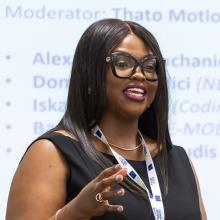
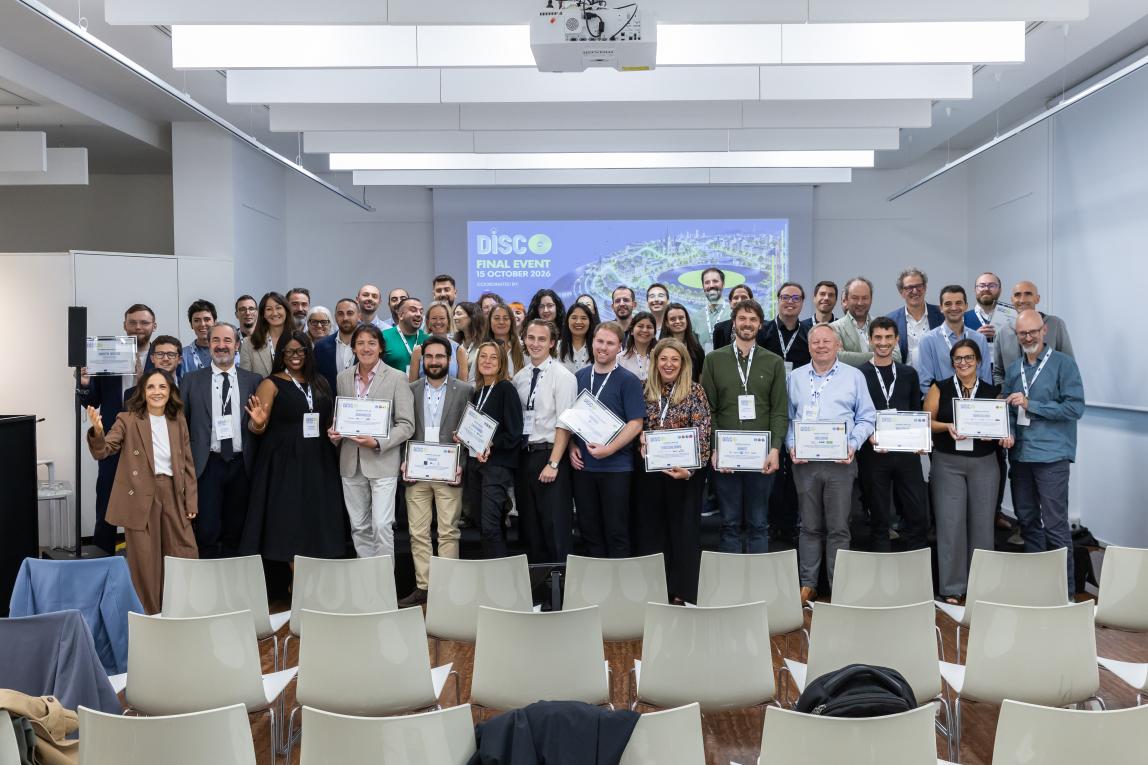
The project concluded with the DISCO Final Meeting in Rome on 15 October 2026, where partners presented results and discussed the future direction of the field. The BUas project lead moderated a panel on Physical Internet-led logistics as a service, a final bow after many conferences and meetings at which BUas represented the project with pride.
DISCO also reached into education. The project provided one internship to a built environment student and two group assignments to logistics students, giving them the opportunity to work with real questions and real project material. This kind of knowledge sharing is the low-hanging fruit of a research project like this: it requires relatively little additional effort and delivers clear value to students and to the project alike. It is, however, only a first step. The bridge between research and education can and should be strengthened further, so that the findings, methods and networks developed in projects such as DISCO become a structural part of what and how we teach. That ambition defines the next step for BUas within SPRONG LILS (Low Impact in Lastmile LogisticS), a project that aims to strengthen research capacity at Dutch universities of applied sciences, with a focus on the built environment and urban logistics.
Policy brochures: https://discoprojecteu.com/resources/
Follow DISCO on LinkedIn to watch or listen to the next podcast: https://www.linkedin.com/company/disco-project-eu/home/